

Chronic Back Pain & Joint Stiffness? How Kerala Panchakarma Treatment Offers Lasting Relief
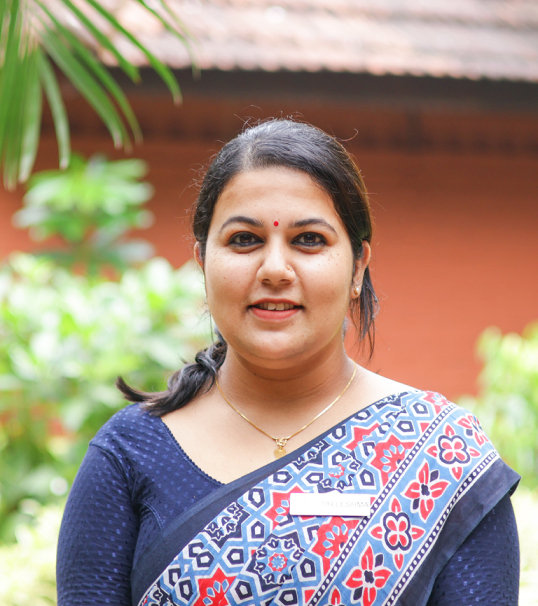
Dr Leshma Vijay

Consultant Physician
The Nattika Beach Resort
Living with chronic back pain or stiff joints can quietly shrink your world. Sitting turns uncomfortable, sleep becomes patchy, and simple movements like bending to tie a shoelace begin to feel like a negotiation with your own body. In 2026, with rising screen time, desk-bound routines, and growing stress levels, more people than ever are searching for relief that outlasts the next painkiller.
Kerala Panchakarma, the crown jewel of traditional Ayurvedic therapy, has been quietly helping travellers from around the world ease persistent back pain and joint stiffness for centuries. Rather than silencing symptoms, it works on the root cause by cleansing the body, nourishing tissues, and restoring natural mobility.
Understanding Chronic Back Pain and Joint Stiffness Through the Ayurvedic Lens
In modern medicine, chronic back pain is usually linked to disc problems, muscle strain, arthritis, sciatica, or poor posture. Ayurveda agrees these factors matter, but it goes a step deeper.
According to the classical texts, most musculoskeletal disorders stem from an imbalance of Vata dosha, the bio-energy that governs movement, nerves, and the lubrication of joints. When Vata becomes aggravated by stress, irregular eating, cold food, overwork, or long hours at a desk, it dries out the tissues supporting your spine and joints. The result is the familiar trio of pain, stiffness, and reduced flexibility.
You can explore these foundational ideas on our Ayurveda Philosophy page.
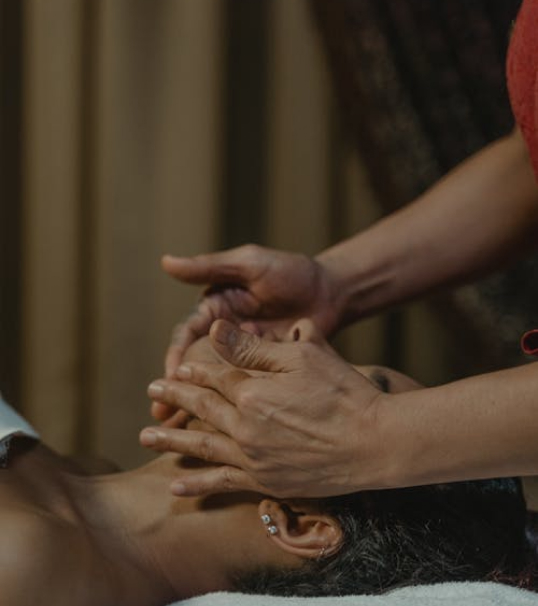
Why Kerala Panchakarma Stands Out
Panchakarma means “five actions” in Sanskrit, and it refers to a carefully sequenced five different cleansing procedures and rejuvenation protocol. Kerala has preserved this tradition in its purest form, thanks to its unbroken lineage of Vaidyas (Ayurvedic physicians), locally sourced medicinal herbs, and a coastal climate that naturally supports the healing process.
A genuine Kerala Panchakarma programme is not a spa package. It is a medically supervised therapy that begins with preparatory procedures (Poorvakarma), followed by the main detox actions (Pradhanakarma), and concludes with rejuvenation and lifestyle guidance (Paschatkarma). Each phase is designed to draw out accumulated toxins (ama), calm aggravated Vata, pitta & kapha,and rebuild joint and tissue health.
Core Panchakarma Therapies for Back Pain and Joint Stiffness
At a traditional centre, your physician will select therapies based on your dosha type, medical history, and the nature of your symptoms. The most effective include:
Abhyanga
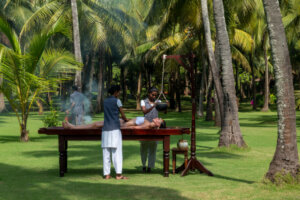
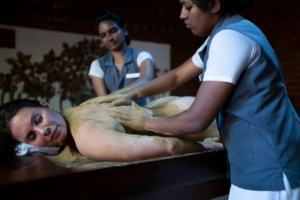
A full-body warm oil massage using medicated herbal oils. Abhyanga improves circulation, relaxes tight muscles, and hydrates deep tissues. Regular sessions reduce stiffness and prepare the body for deeper detox. Learn more on our Ayurvedic Massage in Kerala page.
Kati Basti
A highly targeted therapy where warm medicated oil is pooled over the lower back inside a ring made of herbal dough. It soothes lumbar pain, sciatica, and disc-related discomfort by deeply nourishing the vertebrae and surrounding muscles.
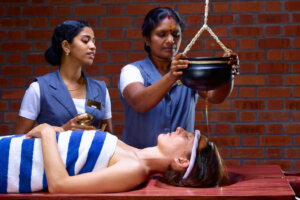
Pizhichil
Often called the “King of Ayurvedic Treatments” , Pizhichil combines a gentle massage with a continuous stream of warm medicated oil poured over the body. It is remarkable for easing arthritis, frozen shoulder, and whole-body stiffness and strengthening the joints
Elakizhi and Njavarakizhi
These are pouches filled with herbal leaves or medicated rice, warmed and applied over painful joints. They work wonders for osteoarthritis, knee stiffness, and spinal rigidity.
Basti (Medicated Enema)
Considered the single most powerful therapy for Vata disorders, Basti uses herbal decoctions and oils to reach deeper tissues. For patients with chronic lower back pain, sacroiliac issues, or long-standing joint problems, Basti is often the turning point. It is considered as half of the ayurvedic treatment as it alleviates directly vata dosha which is responsible for the low back pain.
Why Panchakarma Offers Lasting Relief Instead of Temporary Comfort
Painkillers and gels work on the surface. They dull the signal but leave the underlying imbalanced dosha untouched, which is why the pain tends to return. Panchakarma takes a different route. By flushing out accumulated toxins, rebalancing Vata, lubricating joints, and strengthening the tissues around the spine, it addresses the condition at its source.
Equally important, a proper Panchakarma journey includes personalised diet, daily yoga, and lifestyle adjustments that prevent the issue from returning once you go home. Our methodology of healing body, mind, and soul is built around exactly this long view.
The Nattika Beach Experience for Back Pain and Stiffness
At The Nattika Beach Ayurveda Resort in Thrissur, Kerala, healing unfolds against the backdrop of the Arabian Sea and lush tropical gardens. Every guest arriving with chronic back pain or joint stiffness is first evaluated by our senior physicians at Swastha, The Ayurveda Centre, who design a personalised Panchakarma plan based on your constitution and goals.
Your programme is supported by authentic therapies using herbal oils from our in-house Nattika Life range, daily yoga and meditation at Moksha to improve spinal flexibility, dosha-specific cuisine prepared from organic produce, and peaceful beachfront villas that encourage deep rest. The outcome is not just symptom relief, but a renewed sense of ease in how you move, sleep, and live.
Begin Your Journey Towards a Pain-Free Life
Chronic back pain and joint stiffness do not have to become permanent residents of your life. With authentic Kerala Panchakarma, personalised care, and the right healing environment, the body has a remarkable ability to recover. To explore a customised programme, visit our Reservations page or reach out to our wellness team.
FAQ'S
For lasting results, most Ayurvedic physicians recommend a minimum of 14 to 21 days. Shorter stays can bring relief but are better suited to prevention and rejuvenation.
Yes. When performed under qualified medical supervision, usually panchakarma is safe up to 70 years of age. Therapies are adjusted in intensity and duration based on the individual’s strength and health status.
Not usually. Our physicians review your current medications and design a complementary plan. Any adjustments are discussed and made gradually.
Panchakarma, especially Kati Basti and Basti, is widely used for sciatica and mild to moderate disc issues. Severe structural damage may still require surgical consultation, but many guests report meaningful, lasting improvement.
The cooler, less humid months between October and March are considered ideal. Our Time to Visit guide offers a month-by-month breakdown.
Latest Blogs