
THE ART OF BALANCE: YOGA AND AYURVEDA IN DAILY LIFE

Jiji Peter

Senior Yoga Teacher
The Nattika Beach Resort
The Nattika Experience: A Unique Lecture on Ayurveda, Yoga & Lifestyle Balance
At Nattika, we believe that true well-being begins with understanding ourselves – our nature, our tendencies, and our inner balance. Recently, our team conducted a special educational lecture for our guests, designed to empower them to live a healthy and happy lifestyle through the timeless wisdom of Ayurveda and Yoga.
The session included a PPT presentation and the same content was provided as a handbook/brochure, allowing guests to revisit the material and integrate it into their daily lives.
The session was led by our senior experts:
Chief Doctors Dr. Susan, Dr. Nitha, Dr. Suhas, and Chief Yoga Teacher Ms. Jiji.
Their combined knowledge created an inspiring, informative, and heart-warming experience for everyone in attendance.
More than an informational talk, the session was immersive and experiential. We demonstrated each practice with the guests, answered their questions, and encouraged them to connect deeply with their bodies, minds, and inner rhythms. Both our team and our guests shared how inspiring and transformative the session felt. Witnessing guests finally understand themselves through the lens of Ayurveda and Yoga was truly rewarding.
How Yoga and Ayurveda Work Hand-in-Hand
Ayurveda explains that every individual is unique in body and mind. Each of us is guided by three fundamental energies – Vata, Pitta, and Kapha. When these energies are harmonized, we live with clarity, purpose, and vitality.
Yoga beautifully complements Ayurveda by helping us regulate these energies through movement, breath, meditation, and mindful lifestyle practices.
VATA DOSHA – Air & Ether
Vata governs movement, creativity, expression, and flow. When balanced, it brings enthusiasm, imagination, and vitality. When imbalanced, it can lead to anxiety, nervousness, insomnia, and restlessness.
Traits
- Energetic, inventive, adaptable
- Easily anxious or unsettled
- Difficulty grounding
- Physically: dry skin, cold hands/feet, light frame, fluctuating energy
What Vata Needs
Warmth, routine, stability, and grounding practices.
Yoga Focus
- Slow, steady movements
- Mindful pauses and longer relaxation
- Gentle, restorative postures
Recommended Asanas:
Loosening practices, Tadasana, Balasana, Viparita Karani, Vrikshasana, Paschimottanasana, restorative sequences.
Pranayama:
Deep abdominal breathing, Nadi Shuddhi, Bhramari.
Meditation:
Body awareness, IRT (Instant Relaxation Technique), Soham, “I Am That.”
Avoid:
Fast movements, cold/windy environments, Kapalabhati, Sheetali/Sheetkari, overstimulation.
Best Environment:
Warm, enclosed, protected spaces.
Lifestyle Tip:
Consistency is medicine for Vata.
PITTA DOSHA – Fire & Water
Pitta governs digestion, transformation, and focus. In balance, it gives intelligence, determination, and leadership. When overheated, it becomes irritable, impatient, and competitive.
Traits
- Sharp, disciplined, goal-oriented
- Quick to heat emotionally or physically
- Strong appetite and metabolism
- Physically: warm body, oily skin, sharp features
What Pitta Needs
Cooling, emotional calm, softness, and compassion.
Yoga Focus
- Gentle flows without pushing
- Heart-opening movements
- Cooling and relaxing postures
Recommended Asanas:
Side bends, spinal twists, Adho Mukha Svanasana, Janu Sirsasana, Ardha Matsyendrasana, Setu Bandhasana, Supta Baddha Konasana, Uttanasana, Shavasana.
Pranayama:
Sheetali, Nadi Shuddhi.
Meditation:
Heart-centered visualization: “I am calm. I am kind.”
Avoid:
Overexertion, heat, competitive yoga.
Best Environment:
Cool, airy, peaceful spaces.
Lifestyle Tip:
Choose softness over intensity.
KAPHA DOSHA – Earth & Water
Kapha governs structure, stability, compassion, and nourishment. Balanced Kapha provides patience, endurance, emotional grounding, and resilience. When stagnant, it becomes heavy, sluggish, and unmotivated.
Traits
- Warm-hearted, nurturing, thoughtful
- Strong endurance but slow to start
- Needs stimulation and motivation
- Physically: solid body structure, smooth soft skin, slower metabolism
What Kapha Needs
Movement, challenge, and lightness.
Yoga Focus
- Dynamic warm-ups
- Rhythmic, energizing postures
- Longer holds to activate metabolism
Recommended Asanas:
Tadasana, dynamic warm-ups, Surya Namaskar, Utkatasana, Virabhadrasana, Trikonasana, Navasana, Bhujangasana, Ustrasana, Setu Bandhasana.
Pranayama:
Deep breathing, Anuloma Viloma, Kapalabhati, Bhastrika.
Meditation:
Breath-work affirmation: “I am light, active, full of vitality.”
Avoid:
Long relaxation, excessive sleep, lying down frequently.
Best Environment:
Warm, bright, well-ventilated spaces.
Lifestyle Tip:
Challenge yourself – variety is key.
Diet Principles – Food as Medicine
Ayurveda teaches that food is energy, and every meal can bring balance or imbalance.
Vata Nutrition
- Warm, cooked meals
- Moderate ghee or oil
- Sweet, salty, and sour tastes
- Mild spices
Avoid: irregular eating, fasting, stress eating, fried snacks, excess raw foods.
Pitta Nutrition
- Warm meals with minimal oil
- Sweet and bitter tastes
- Plenty of hydration
Avoid: spicy, very sour, fermented foods, long fasting, overheating foods or drinks.
Kapha Nutrition
- Warm to hot meals
- Dry and light foods
- Pungent and spicy tastes
Avoid: heavy, overly sweet or salty meals, sleeping after food, excess water, improper fermentation.
Dinacharya – Aligning With Nature’s Rhythm
Daily routine helps anchor emotional and physical health.
Morning Rituals
- Rise in Brahma Muhurta (90 mins before sunrise)
- Brush teeth morning and night
- Tongue scraping
- Eye washing
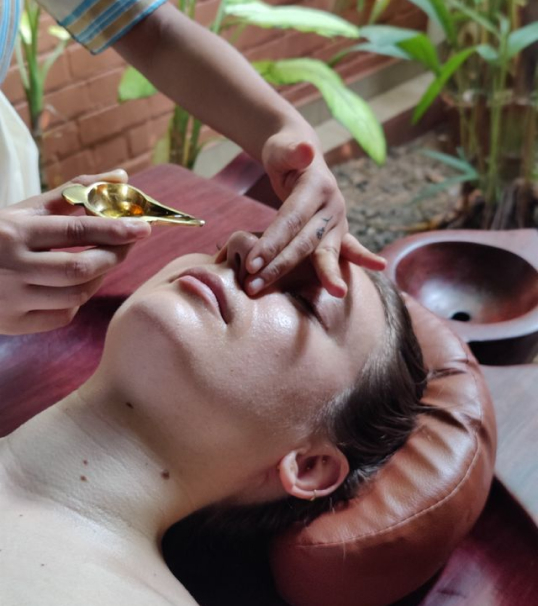
- Nasyam (nasal drops)
- Kavala/Gandusha (oil pulling)
- Abhyanga (oil massage)
- Vyayama (exercise)
Evening Rituals
- Focus on relaxation and grounding
- Padabhyanga (foot massage with oil)
- Light dinner
- Gentle environment
- Early sleep
Living Ayurveda & Yoga
Balance is not achieved in a single day – it is a lifestyle.
When we:
- Understand our unique dosha
- Practice the right yoga
- Eat according to our constitution
- Follow nurturing routines
Life becomes harmonious, joyful, and deeply meaningful.
Yoga and Ayurveda remind us: you don’t need to change who you are – only return to your natural balance.
By listening to ourselves, we not only understand our own character but also those around us – our partners, children, colleagues, and friends. This awareness nurtures patience, reduces conflict, and supports relationships with compassion rather than ego or friction.
Conclusion
The session beautifully explained how to structure a healthy day:
Morning Dinacharya
Cleansing rituals, yoga, pranayama, and meditation – balancing physical, pranic, and emotional levels.
Daytime
Mindful meals, responsible work or study, and calm focus in professional life.
Evening
Avoid strenuous exercise; spend quality time with nature, family, friends, or community.
Prepare for sleep with gentle massage and positive affirmations.
Guest Feedback
Following the session, our guests expressed heartfelt gratitude. Many were emotionally touched by the depth of the teachings.
- “Dear Nattika team, I know my character, but after this session I can now understand others easily. It has helped me listen and remain practical in every situation.”
- “On the first day the doctor placed me in a dosha category, but I didn’t understand why. After this session, I clearly understand who I am and why I belong to that type.”
- “This session is the best gift – more valuable than a service. It is something we will carry for life.”
- “Very informative and beautifully communicated. Thank you.”
Several guests felt inspired to begin practicing immediately. Some appreciated that every speaker presented with clarity, warmth, and depth, while others acknowledged that applying everything may be challenging – but promised to try.
The positive response has encouraged us to continue sharing this knowledge as a service to our guests and community.
FAQ'S
Ayurveda identifies your unique dosha type, while Yoga offers postures, breathwork, and meditation that help balance those energies. Together, they create emotional stability, physical strength, and mental clarity in daily life.
A certified Ayurvedic doctor evaluates your physical traits, emotional tendencies, digestion, sleep, and lifestyle patterns to identify your dominant dosha. Resorts like Nattika provide detailed consultations for accurate assessment.
Vata benefits from slow, grounding postures, Pitta from cooling and heart-opening practices, and Kapha from energizing, dynamic movements. Practicing according to your dosha helps maintain balance and prevents imbalance-related issues.
Dinacharya is the Ayurvedic daily routine that aligns the body with nature’s rhythm. It includes cleansing practices, oil massage, yoga, pranayama, balanced meals, and mindful relaxation. It helps improve digestion, sleep, energy, and overall wellness.
Yes. The lifestyle recommendations, asanas, and breathing exercises shared in the session are suitable for beginners. Guests are encouraged to start slowly, stay consistent, and adapt practices according to their dosha.
Latest Blogs