

Why Anxiety Is Rising Globally and How Grounding Therapies Calm the Nervous System
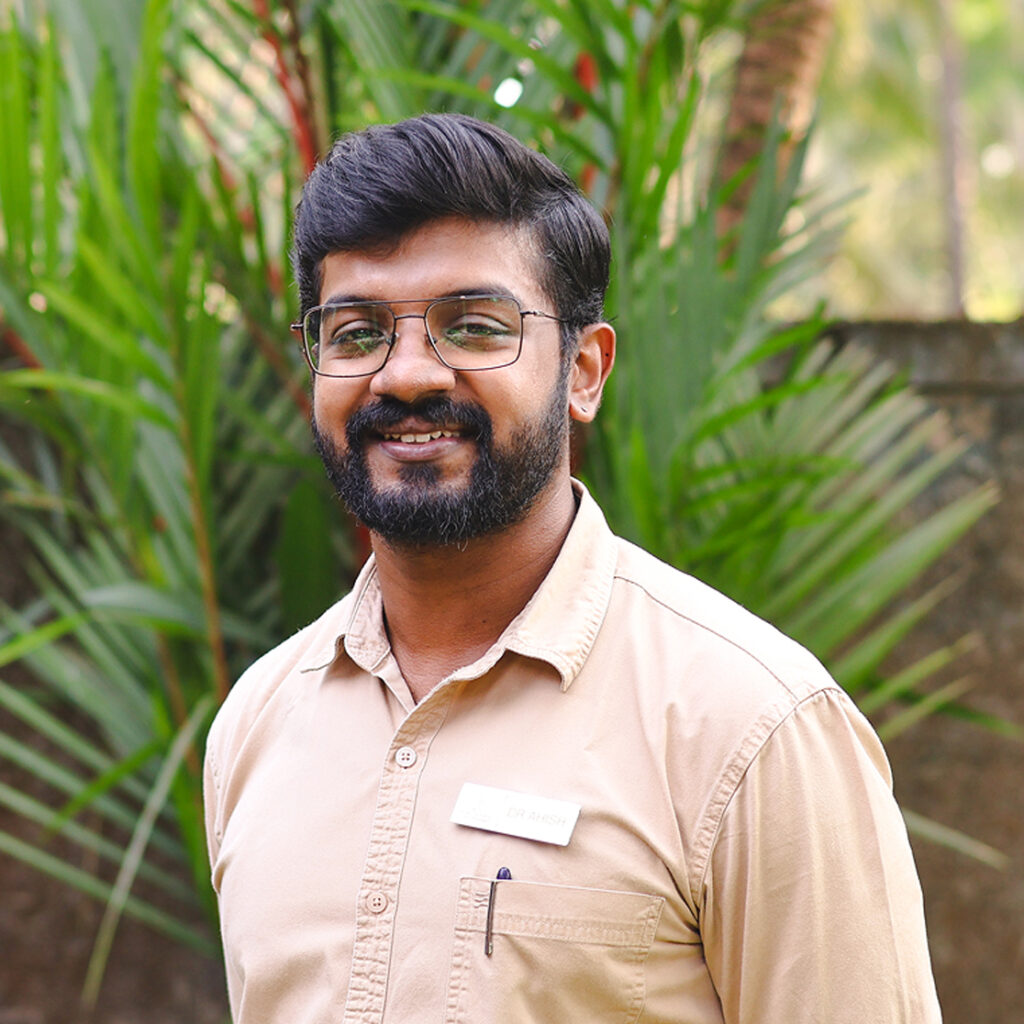
Dr Ahish H Pillai

Consultant Physician
The Nattika Beach Resort
World health organization now reports that more than one billion people worldwide live with mental health condition. In 2026, anxiety is no longer a private struggle whispered about in clinics. The World Health Options, with anxiety and depression being the most common. As pressure builds across work, finances, and global news cycles, amplified by social media, more travellers are looking beyond quick fixes toward slower, body-led approaches. This is one reason an authentic Ayurveda treatment in Kerala has become a quiet but powerful answer for nervous systems that simply will not switch off.
The Global Anxiety Picture in 2026
Recent data tells a clear story. Around 301 million people globally live with an anxiety disorder, and the WHO observed a 26 percent rise in anxiety during the pandemic years, with much of that increase still present today. Studies published in early 2026 also project global anxiety cases could exceed 515 million by 2040 if current patterns continue.
Younger generations are carrying a heavy share. Research in the Global Burden of Disease dataset shows a 52 percent rise in anxiety incidence among people aged 10 to 24 between 1990 and 2021. Women remain disproportionately affected across nearly every region. The economic cost is staggering too, with depression and anxiety together estimated to cost the global economy around one trillion US dollars each year in lost productivity.
In short, anxiety is not a personal failing. It is a global pattern shaped by the way modern life now runs.
Why Modern Life Triggers a Stressed Nervous System
The human nervous system evolved for short bursts of stress followed by long stretches of rest. Today, most people live the opposite. Notifications, deadlines, late nights, processed food, and constant comparison keep the body in a low grade fight or flight state. Sleep becomes lighter and digestion turns irregular. The mind races even during quiet moments.
Ayurveda describes this pattern as an aggravation of Vata, the bio energy linked to movement and the nervous system. When Vata is disturbed, people often notice restlessness, scattered thoughts, shallow breath, dry skin, anxious sleep,unable to concentrate and difficulty settling. The classical response is not stimulation, It is grounding.
What Grounding Really Means for the Nervous System
Grounding therapies are practices that signal safety to the body. They use warmth, weight, rhythm, slow breath, and steady touch so the nervous system can move from alert mode into rest and repair. Modern neuroscience would describe this as activating the parasympathetic branch of the autonomic nervous system. Ayurveda has described it for thousands of years as pacifying Vata and restoring Sattva, the quality of clarity and calm.
You can read more about this approach in the Ayurveda Philosophy followed at The Nattika Beach Resort.
How Ayurveda Treatment Calms the Nervous System
A traditional Ayurveda treatment is not a single massage. It is a combination of external therapies, personalised diet, internal medications, daily routine, yoga, and meditation along with rest to bring a rhythm into the life. Each element works on the nervous system in a different way.
Abhyanga: Warm Oil and Rhythm
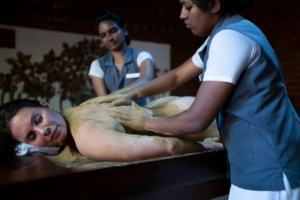
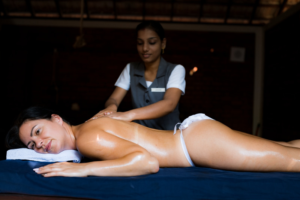
Abhyanga, the classical warm oil massage, is often the foundation of an anxiety focused program. The combination of warmth, slow rhythmic strokes, and herbal oils helps soften muscular tension, reduce body stiffness, deepen the breath, and quiet mental chatter. Many guests describe feeling steadier, warmer, and less reactive after just a few sessions.
Shirodhara: A Steady Stream That Slows the Mind
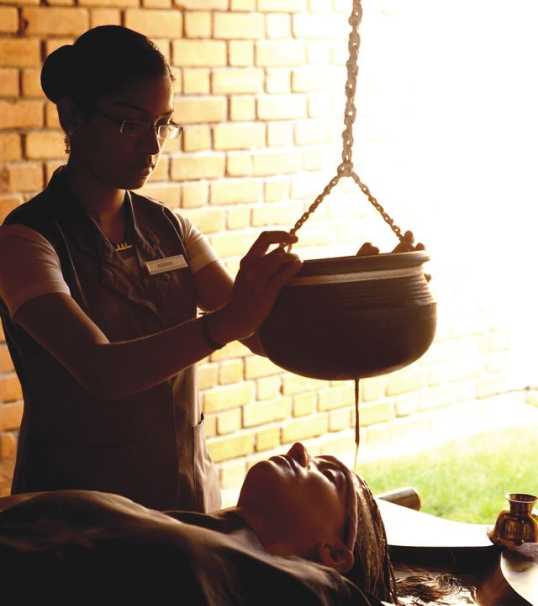
In Shirodhara, warm medicated oil is poured in a continuous stream over the forehead. The steady flow of oil over the forehead has a hypnotic, settling effect on the brain. It is one of the most respected Ayurvedic procedures for restlessness, insomnia, and overthinking, and is often part of personalised plans for guests carrying long term stress.
Daily Routine, Diet, and Yoga
Therapies work best when the wider day supports them. Early mornings, regular meal times, simple cooked food, gentle yoga, and reduced screen time give the nervous system fewer spikes to manage. At The Nattika Beach Resort, daily yoga at Moksha and an Ayurvedic healing cuisine are built into every program so the calming effect compounds across days, not just sessions. Daily yoga and meditation under proper guidance gives a routine calmness to your mind & body.
Choosing an Ayurveda Retreat in Kerala
Kerala is widely regarded as the home of clinically supervised Ayurveda. Programs typically begin with a detailed consultation, followed by therapies prescribed at the Swastha Ayurveda Centre and guided by the resort’s treatment principles. For anxiety and nervous system support, a stay of 14 to 21 days usually allows the body to get enough time to settle into a new rhythm. Arriving with the right expectations also matters, which is why many guests find these mindset tips before an Ayurveda retreat helpful before they travel.
A coastal setting adds another quiet layer of regulation. The sound of waves, predictable daylight, and unhurried meals all act as natural grounding cues that reinforce the clinical work being done inside the treatment rooms.
If you are ready to give your nervous system a real chance to settle, explore our Ayurveda treatment programs or request a reservation and our team will help you choose the right duration for your needs.
FAQ'S
Ayurveda does not treat anxiety as a single disorder. It works on the underlying patterns of sleep, digestion, breath, and Vata regulation that influence how anxious a person feels day to day. Many guests notice clearer thinking and calmer sleep within the first two weeks.
No. Ayurveda is best viewed as complementary. If you take prescribed medication or see a mental health professional, continue that care and inform your Ayurvedic doctor so your plan can be safely tailored.
Abhyanga, Shirodhara using different medicines, Thalam and Nasya are commonly used for nervous system support. The exact combination is decided by the doctor after consultation.
Seven days offers a reset. Fourteen to twenty one days allows deeper recalibration of sleep, digestion, and mood. Longer stays suit people with long standing patterns or those undertaking Panchakarma.
Yes. First time guests are common, and the program is paced to introduce therapies gradually under medical supervision.
Latest Blogs