

Ayurvedic massage – procedure, effects, and types

Dr Leshma Vijay

Consultant Physician
The Nattika Beach Resort
In Ayurveda, massages are not seen as a luxury. It is a quiet, grounding way to support balance, especially in a fast, overstimulating world. In Kerala, this tradition has been preserved with great care, which is why many travelers seek kerala ayurvedic massage as part of a slower, more mindful retreat experience.
This guide explains how Ayurvedic massage is traditionally understood, what a session often looks like, and which classical types you may hear about.
Ayurvedic understanding of Massage, oil, and body balance
Ayurveda describes the body through three doshas which have different functions as well as certain qualities such as dry or oily, heavy or light, hot or cool. When these qualities become excessive due to stress, irregular routine, travel, or seasonal shifts, balance can feel disturbed.
Massages and oil are traditionally used because they bring opposing qualities: oiliness can soften dryness, warmth can ease stiffness, and steady rhythmic strokes can help settle restlessness. From this view, massage supports a sense of wholeness, not a single targeted outcome.
To understand how therapies are chosen in a classical setting, it helps to read about Ayurveda treatments and how they are matched to individual body constitution.

What is Ayurvedic massage
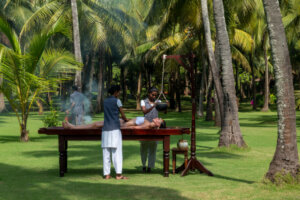
Ayurvedic massage is a traditional practice that uses warm herbal oils, mindful touch, and specific stroke patterns to encourage relaxation and balance. In many settings, it is considered part of ayurveda massage therapy, meaning it is approached as a supportive wellness ritual within a larger lifestyle framework.
Unlike a generic spa massage, the Ayurvedic approach considers factors like body constitution, season, appetite, sleep quality, and daily routine. The intention is to support the person’s overall steadiness.
General procedure of Ayurvedic massage
A session can vary by tradition and by individual needs, but many follow a calm, step by step flow:
- Brief consultation before the treatment in which doctors often ask about the sleep, digestion, stress, and the present day’s condition of the individual
- Preparation, including a quiet room, warm oil, and a few moments to settle the breath
- Application of oil with rhythmic strokes, often starting at the scalp or limbs and moving steadily
- Gentle attention to joints and marma points (traditionally significant areas), without force
- Rest period afterward, allowing the body to absorb warmth and quiet
In a retreat context, an ayurvedic body massage is usually followed by a warm bath or herbal steam, depending on the program, so the body can adapt slowly back to activity.
Oils used in Ayurvedic massage
Oil is essential to the Ayurvedic approach because it carries prime qualities and herbal preparations. The choice of oil can change with the type of body constitution and season. In many traditions, sesame oil is favored for its warming, grounding nature, while coconut oil may be chosen when cooling qualities are desired.
You may also hear the term ayurvedic massage oil to describe medicated oils prepared with classical herbs. These are traditionally selected by the Ayurvedic medical practitioners and warmed before application to enhance comfort and easy absorption.
Effects of Ayurvedic massage on wellness and relaxation
In an Ayurvedic frame, effects are often described as shifts in qualities rather than clinical outcomes. Many people report a calmer nervous system, a softer body, and more stable sleep when massage is paired with simple food and adequate rest.
Because oil is used generously, Ayurvedic oil massage is also traditionally associated with a sense of nourishment, especially for those who feel dry, depleted, or mentally overactive.
When people ask about Ayurvedic massage benefits, common wellness oriented responses include:
- Deep relaxation and a quieter mind
- A sense of grounding, especially during travel or life transitions
- Comfort in joints and muscles through warmth and gentle movement
- Better body awareness, encouraging slower, more mindful daily habits
Different types of Ayurvedic massage
Kerala is known for preserving a wide range of classical therapies. The exact names and methods can differ slightly between lineages, but these are commonly discussed:
- Abhyanga: The classic full body oil application with rhythmic strokes, traditionally used to calm and nourish.
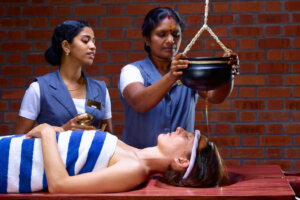
- Shirodhara: A steady stream of warm liquid (often oil) applied to the forehead area, traditionally used for deep mental rest.
- Pizhichil: Warm oil therapy where oil is applied continuously with gentle massage, often associated with profound soothing.
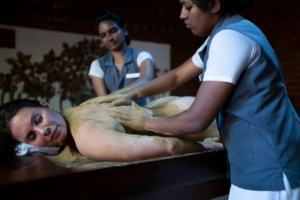
- Udvartana: A powder based massage (often with herbal powders) traditionally used when lightness and stimulation are desired.
- Kizhi (Pinda Sweda): Warm herbal poultices used with gentle tapping and strokes, commonly used for comfort and warmth.
If you are curious about how these therapies are offered in a coastal retreat setting, you can explore Ayurvedic massage in Kerala and the structure of an Ayurvedic retreat Kerala.
Ayurvedic massage is best understood as a traditional art of slowing down. Through warm oil, mindful touch, and unhurried pacing, it supports the qualities Ayurveda values: steadiness, softness, and inner calm.
If you are choosing an ayurvedic massage centre, look for a setting that respects tradition, offers practitioner guidance, and encourages rest afterward. For many travelers, this is what defines the best ayurvedic massage in kerala: not intensity, but authenticity, care, and a peaceful environment.
FAQ'S
It is a traditional wellness practice using warm oils and rhythmic strokes to encourage relaxation and support balance according to Ayurvedic principles
Oil is traditionally used to bring nourishment and grounding qualities, helping the body feel softer, calmer, and more settled.
Frequency depends on the person and season. Some people receive it weekly or monthly, while retreats may include it more regularly as part of a guided program.
Traditionally, yes. Many people choose it during travel or high stress times because it supports rest, routine, and a grounded feeling.
Many people can enjoy it as a relaxation practice, especially those seeking calm, better rest, or a slower pace. Traditional guidance is recommended to personalize the approach.
Latest Blogs