

Shirodhara: What It Is, How It Works, and Why People Cry During It

Dr. AKSA ANNA ABRAHAM

Consultant Physician
The Nattika Beach Resort
There is a moment in Shirodhara – usually around the ten-minute mark – when the body stops trying to think and simply surrenders. For some guests, that surrender arrives quietly. For others, it arrives as tears. If you have ever wondered what this ancient Ayurvedic therapy actually does, why it feels so profoundly different from a regular head massage, and why emotional release during a session is more common than most people expect, this guide is for you.
What Is Shirodhara?
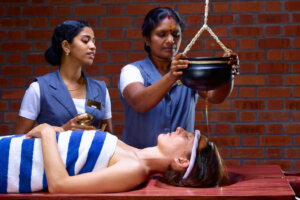
Shirodhara (pronounced shee-roh-dha-ra) comes from two Sanskrit words: shiro meaning head, and dhara meaning flow or stream. In practice, it is exactly that – a continuous, gentle stream of warm medicated oil poured steadily onto the forehead, specifically onto the area known in Ayurveda as the Ajna marma, or the third eye point.
The therapy has been part of Ayurvedic medicine for over 3,000 years. It belongs to a category of treatments called Murdhataila – therapies applied specifically to the head – and is one of the most recognised Ayurvedic treatments in the world today.
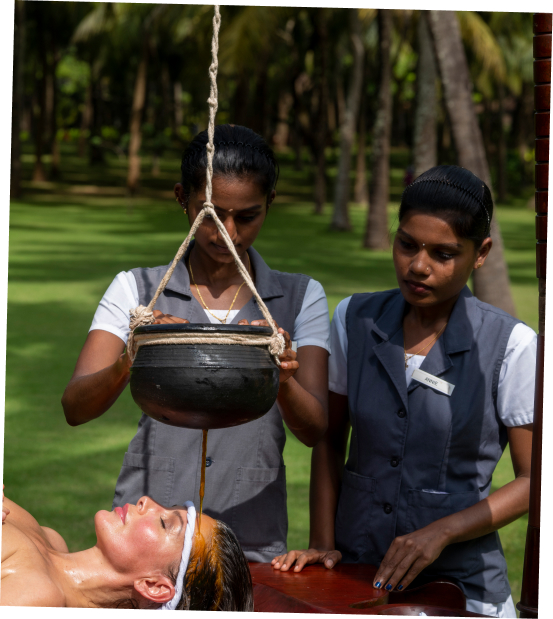
The liquid used is carefully chosen by your Ayurvedic physician based on your dosha (body-mind constitution) and the specific condition being addressed. Thailadhara (Medicated herbal oils), kashayadhara (herbal decoction), takradhara (buttermilk) or even ksheeradhara (plain milk) may be used depending on what your body needs. At a physician-led centre like Swastha, the Ayurveda Centre at Nattika, this decision is never made casually – it is included in the treatment program after the detailed first consultation, taking your health complaints, dosha imbalance and other factors into consideration.
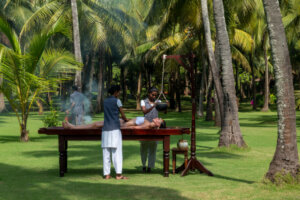
A session typically lasts between 30 and 60 minutes. You lie on a wooden treatment table (droni), eyes covered, while the warm oil flows in a slow, rhythmic pattern across the forehead. The temperature is kept precise – warm enough to penetrate, never hot enough to alarm.
How Does Shirodhara Actually Work?
This is where Shirodhara becomes genuinely fascinating, because the mechanism operates on several levels simultaneously.
On a neurological level, the steady stream of warm oil stimulates the hypothalamus and the pituitary gland through vibration and thermal sensation. This activates the parasympathetic nervous system – your body’s “rest and digest” mode – and suppresses the cortisol-driven stress response that most modern lives keep perpetually switched on. Brain wave activity measurably slows, shifting from active beta waves toward the slower alpha and theta rhythms associated with deep relaxation and meditative states.
On an Ayurvedic level, the treatment works by balancing Vata dosha, which governs all movement in the body – including the movement of thoughts, fears, and anxiety. Excess Vata manifests as mental restlessness, insomnia, scattered thinking, and emotional sensitivity. The continuous warm flow grounds and stabilises this erratic energy, restoring what the Ayurvedic treatment principles describe as the natural harmony of body and mind.
On a marma point level, the forehead point targeted during Shirodhara is one of the most significant vital energy points (marma) in classical Ayurveda. Stimulating it helps regulate sensory function, mental clarity, and the subtle nervous system – the channel through which emotional memories are believed to be stored and released.
Shirodhara is particularly well matched for conditions driven by chronic mental stress: sleep disorders, anxiety, migraines, hypertension, and burnout. It is also used within structured Panchakarma detox programmes as a preparatory or complementary therapy, helping the mind remain calm and receptive while the body undergoes deeper cleansing.
Why Do People Cry During Shirodhara?
This is the question guests most often ask quietly, sometimes only after it has already happened to them.
The answer lies in how the body stores stress. Modern neuroscience and classical Ayurveda agree on something remarkable: emotional tension is not only held in the mind. It lives in the body – in the muscles, the connective tissue, the nervous system, and particularly in the head and neck region. Years of suppressed grief, unprocessed anxiety, or accumulated mental fatigue do not simply disappear. They compress and wait.
Shirodhara creates what is perhaps the first conditions of genuine safety the nervous system has experienced in a long time. The warmth, the rhythm, the absence of demand – all of it communicates to the deepest layers of the body that it is now safe to let go. When that message lands, the release is real. Tears are not a sign that something has gone wrong. They are frequently a sign that the treatment is working exactly as intended.
Some guests describe it as feeling like a weight being gently lifted from the forehead and chest. Others say they feel nothing during the session but sleep unusually deeply that night. Emotional responses vary from person to person and even from session to session for the same individual. All of it is considered normal within Ayurvedic understanding.
The experience is held carefully at a retreat environment. The quiet of the treatment room, the absence of distraction, and the presence of a trained therapist create the space for whatever arises to be received without judgement.
What to Expect After a Session
Most guests describe a state of deep, almost liquid calm in the hours following Shirodhara. Thinking feels slower and cleaner. Sleep, that night and often for several nights afterward, tends to be noticeably better. Some guests notice a heightened sensitivity to sound, light, or emotion for a short period – this is the nervous system recalibrating, and it settles with rest.
Ayurvedic guidance after the session usually includes staying warm, avoiding cold food and drinks, resting rather than rushing into activity, and allowing the oil to remain on the scalp for a few hours before washing. The Ayurvedic cuisine at Nattika – warm, sattvic, and doshically balanced – naturally supports this recovery.
For those with chronic stress, anxiety, or long-term sleep disruption, a single session is deeply beneficial, but a course of three to five consecutive treatments tends to produce the most lasting results. This is why Shirodhara features prominently within week-long and longer Ayurveda wellness packages rather than as an isolated spa add-on.
Shirodhara at Nattika Beach Ayurveda Resort
At Nattika, Shirodhara is prescribed rather than booked off a menu. An Ayurvedic physician first assesses your constitution, current health state, and the specific intention of your stay – whether that is stress relief, better sleep, Panchakarma detox, or general rejuvenation. The choice of type of liquid for the Shirodhara, the duration of the session, and whether Shirodhara is used alone or alongside treatments like Abhyanga massage are all tailored accordingly.
The treatment is conducted at Swastha, Nattika’s dedicated Ayurveda treatment centre, by experienced therapists working under physician supervision. The oils used are prepared in-house through Nattika Life, following classical formulations with Kerala-grown medicinal herbs.
If you are arriving in Kerala specifically for Shirodhara or a broader Ayurvedic treatment programme, Nattika’s beachside setting – calm, clean-aired, and unhurried – is itself part of the therapy. The sound of the Arabian Sea, the absence of city noise, and the rhythm of daily yoga sessions at Moksha create the conditions in which Ayurvedic treatment does its best work.
To plan your stay or discuss which programme might suit you best, visit the reservations page or reach the team directly through the contact page.
FAQ'S
A single session produces noticeable calm and improved sleep for most people. For lasting results – particularly for chronic stress, anxiety, migraines, or long-standing sleep disorders – a course of three to five consecutive sessions is generally recommended. At Nattika, your Ayurvedic physician will advise the right number based on your specific condition and the length of your stay. Most guests find that a 7-night Rejuvenation Package provides enough time to complete a meaningful course of treatment.
Shirodhara is a gentle therapy and is safe for most adults when prescribed and supervised by a qualified Ayurvedic physician. However, it is not recommended during pregnancy, immediately after head injury, for those with very low blood pressure, or during active skin conditions on the scalp or forehead. It is also unsuitable in certain conditions like cold, cough or fever. This is precisely why Nattika follows a doctor-first approach – every guest undergoes a full consultation at Swastha, the Ayurveda Centre, before any treatment is prescribed. The therapy is adapted, not applied uniformly.
Most guests describe a gradual dissolving of mental noise – thoughts slow down, the body stops bracing, and a deep, almost meditative stillness settles in. Some feel a gentle warmth spreading from the forehead through the scalp and neck. Others fall into a light sleep. The experience is rarely dramatic in the moment; it tends to deepen quietly over the course of the session. The most striking effects – the quality of sleep that night, the unusual sense of mental clarity the next morning – often arrive after the session ends.
Yes, the choice of liquid varies significantly and is one of the most important clinical decisions in the treatment. Sesame-based medicated oils are commonly used for Vata-related conditions like anxiety and insomnia. Coconut oil or cooling herbal preparations may be chosen for Pitta imbalances involving inflammation or irritability. Buttermilk (Takradhara) is used in specific conditions like psoriasis or certain stress-related scalp disorders. At Nattika, oils are prepared in-house through the Nattika Life herbal facility using classical formulations and Kerala-sourced medicinal plants – you can learn more about this on the Nattika Life wellness products page.
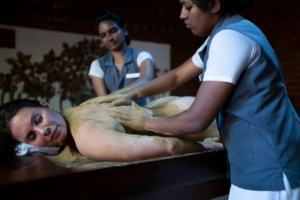
Absolutely – and it often works best that way. Shirodhara is frequently paired with Abhyanga (full-body warm oil massage) in the same session, with the massage preparing the body before the head treatment begins. Within a Panchakarma programme, it serves as a powerful complementary therapy that keeps the nervous system calm while deeper detoxification is underway. Your physician at Nattika will design a daily treatment plan where Shirodhara fits alongside other Ayurvedic therapies in a sequence that makes clinical sense for your body and goals.
Latest Blogs