



Structure Of Back
The strcuture of spine consist of 4 regions with different numbers of vertebrae ( a small bone which protects the spinal cord )
- Cervical (7 Vertebrae) – allows wide range of head and neck movement.
- Thoracic (12 Vertebrae) – helps to stabilize ribs and ribcages and protect vital organs like lungs and heart
- Lumbar (5 Vertebrae) – it bears body weight and allow trunk to move.
- Sacrum (5 Fused Vertebrae) –strengthen and stabilize the pelvis muscles.
- Coccyx (3 to 5 fused vertebrae ) –important in child birth
Types Of Back Pain
In general back pain can be classified into 3 types,
- Acute back pain – happens suddenly and last up to few weeks
- Subacute back pain – it also happens suddenly and last up to 4 to 12 weeks
- Chronic back pain – may come suddenly or slowly and last longer than 12 weeks.
Various reason for back pain
- Congenital – inborn conditions of axial skeleton can cause the symptom like scoliosis, lordosis.
- Degenerative – the bones can get weaker due to aging, overuse or from intervertebral disk herniation.
- Postural – sitting for a long time can also make stiffness in the back and women can get back pain during menstruation and pregnancy.
- Strain or sprain: an injury to muscle, tendon or ligaments from lifting in an improper way or from aggressive physical exercises can be a reason for the back Pain.
- Stress – stress can cause tension in the muscles over different parts and also in your back, which results in back pain.
- Overweight: the extra weight pressures in the spine and compress the nerves which cause disc herniation.
- Inflammatory conditions: an inflammation on the spine likes arthritis or ankylosing spondylitis can worsen the back condition and can cause severe back pain.
- Myofascial pain: tightness and pain in the muscles which supports the back can be another reason for the back pain.
Complications of back pain
Ever you think what happens if you don’t treat your back pain properly and just managing with temporary pain relief balms. In some cases, the pain can get worse like herniated disc or inflammation on the back. And also, it can limit your physical movements which affects your routine life. Any physical condition can affect our mental health too. Back pain also can be a reason for mental conditions likes stress or depression.
Various yogic technique in the management of backpain- Yama & Niyamas
- Asanas
- Pranayama
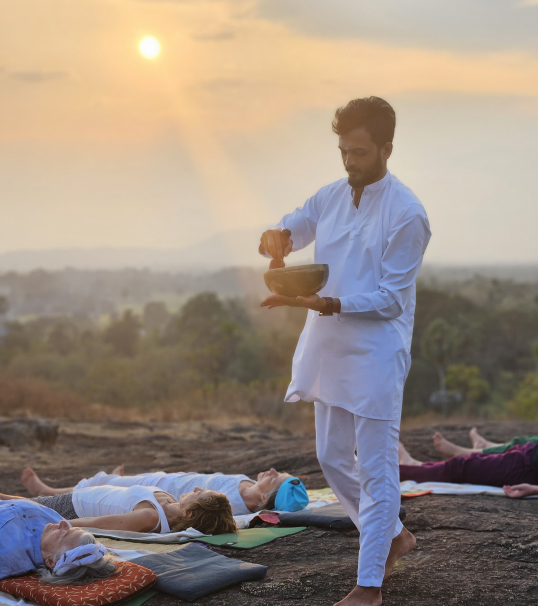
- Meditation
Yama & Niyamas
Yamas is referred as social discipline which are Ahimsa (Non-violence), Satya (Truthfulness), Asteya (Non stealing), Bhramacharya (celibacy) and aparigraha (Non possessiveness). Then we have 5 niyamas, the personal discipline which consist of Saucha (Cleanliness), Santosha 9 Contentment), Tapas (Austerity), Swadhyaya (Self-study) and ishwarapranidhana (Surrendering to the god). These 10 qualities help to maintain a good mental and physical health also and improve our awareness to our body and promote more positive approach to many things in our life which directly and indirectly helps to prevent getting back pain and to manage also.
Asanas
Many research shown that yoga practice can ease the back pain and by continuous yoga practice, it can reduce the chronic back pain. Yoga postures improve the mobility of spine and relieve the tension from the spine and back muscles. Also, there are certain postures which we should avoid doing when we have pain. Also, we should make sure that we are doing the posture with proper alignments, precautions and with a good guidance. In some conditions like stiffness or sciatica, we should stretch and loosen the joints and muscles. In case of weakness or arthritis, we need to do some strengthening yoga postures also depending on the present condition. Here we have attached the list of some important asanas which can be helpful to stretch and strengthen the back.
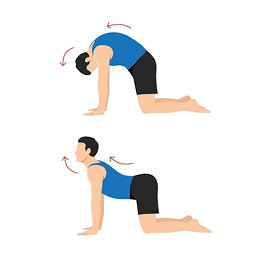
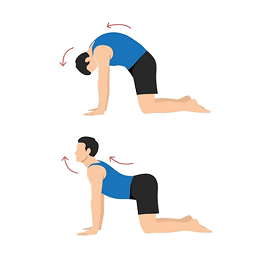
1) Marjaryasana (Cat and cow)
This posture improves the back mobility and relieve tension from the back and also strengthen the muscles. This is also a good pose to improve blood circulation for the back and moreover an easy pose which can be practised by most people.
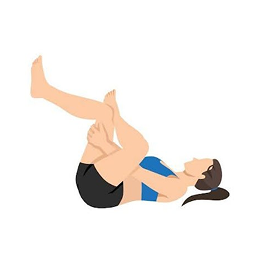
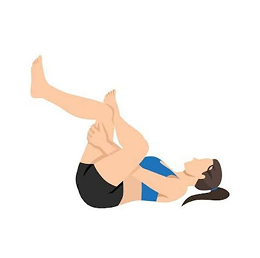
2) Sucirandhrasana (Eye of the needle pose )
This is very gentle and safe pose to relieve pain from sciatica pain. During this pose, we get a mild stretch on the back and helps to improve pelvic and hip flexibility.
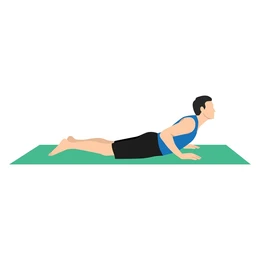
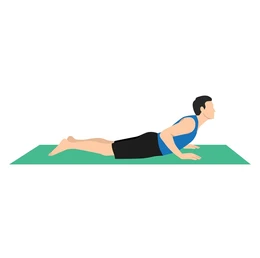
3) Bhujangasana (Cobra pose)
This prone pose helps to manage many back conditions like spondylitis, disc herniation, stenosis and to release the stiffness in the back and also strengthen the spine.
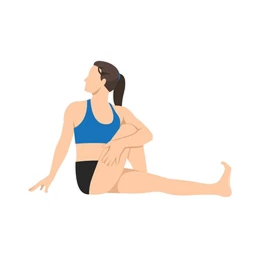
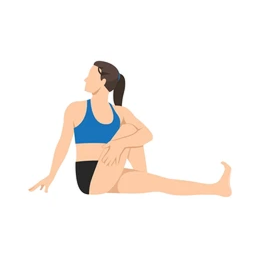
4) Vakrasana (Spinal Twist)
This twisting seated pose has a significant role with back conditions. It realigns the spine and improve spine mobility and gently massage our spine. But, people with severe back pain or inflammatory conations can consult doctor before doing this.
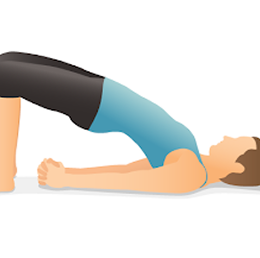
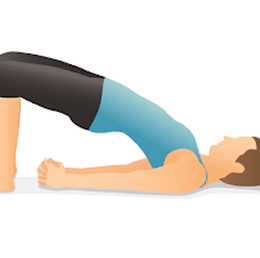
5) Setu bandasana (Bridge pose)
This is a good yoga pose to strengthen the low back muscles and to correct the posture. Also it can also relax the nervous system.
Pranayama
Pranayama like Nadishodana helps to calms the mind, energise the body and most importantly it increases the blood and prana circulation throughout the body especially in the spine. People with back pain feel stressed and they may don’t practice really a natural breathing as they may have increased stress level. So, some of the other pranayama like bhramari and sheetkari also helps to overcome stress and anxiety which is another reason to get back stiffness and pain.
Meditation
Some of the meditation techniques like body scanning, mindfulness meditations promote self-awareness. By bringing concentration to our body, we started noticing our postures and breathing pattern. We also get pain with poor postures, which can be corrected through this kind of meditations.
Conclusion
Being a yoga teacher in an ayurvedic wellness resort we have seen many people who suffer from different kind of back conditions. And, we found some of the yogic techniques like we mentioned above were really helpful for them to manage their pain. Many studies also conclude that yoga can be a good and safe option for the management of back pain. But we should diagnose our root cause for the back pain and also, we should practice under a guidance of a experienced yoga teacher when we have such sever back pain. By making a safe and well precautioned yogic techniques, surely, we can have a healthy and pain free life.
Frequently Asked questions
What are the initial steps when we get back pain?Initially we should rest ourselves until we feel a bit better and should not do any postures immediately when we feel pain. After consulting a doctor only, we can do anything by own.
Can yoga techniques cure all the types of back pain?
No, yoga is really a good and safe option to manage pain in many back conditions. But, in some severe inflammatory conditions, we need more rest and we also need to avoid certain poses. And we can never assure that yoga can cure every back pain, it always helps to manage the pain.
Why I feel pain in the back, even though when I do practice every day?
This is actually a hidden question for many of us. There are some reasons like overdoing the practices, improper postures or too much strain. So, we need to be gentle with our body and with postures.
Should we need to join a class or practice at home?
Initially we should practice under a guidance of experienced yoga teacher as we may do some mistakes in the beginning and teacher can correct our alignment. And if you have back pain, it can get worse with self-practice.
References:
1. Chang, D. G., Holt, J. A., Sklar, M., & Groessl, E. J. (2016). Yoga as a treatment for chronic low back pain: A systematic review of the literature. Journal of orthopedics & rheumatology, 3(1), 1–8.2. Holtzman, S., & Beggs, R. T. (2013). Yoga for chronic low back pain: a meta-analysis of randomized controlled trials. Pain research & management, 18(5), 267–272. https://doi.org/10.1155/2013/105919
3. Casiano VE, Sarwan G, Dydyk AM, et al. Back Pain. [Updated 2023 Dec 11]. In: StatPearls [Internet]. Treasure Island (FL): StatPearls Publishing; 2025 Jan-. Available from: /https://www.ncbi.nlm.nih.gov/books/NBK538173/