

Abhyanga Full-Body Massage: Procedure, Benefits and What to Expect

Dr Leshma Vijay

Consultant Physician
The Nattika Beach Resort
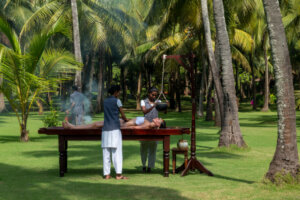
An Abhyanga full-body massage is an Ayurvedic oil massage of the entire body using warm oil, gentle strokes and a structured process. Traditionally, it is associated with relaxation, body care and inner calm in Ayurveda. In this article, you will learn what happens before, during and after the treatment.
What Is an Abhyanga Full-Body Massage?
An Abhyanga full-body massage is a traditional Ayurveda massage in which the body is massaged with warm oil. The Ayurveda treatment follows Ayurvedic principles and uses flowing movements. It is usually adapted to the individual constitution, season and desired focus.
Unlike a purely muscle-focused massage, Abhyanga Ayurvedic full-body massage does not focus only on applying pressure to individual areas of tension. Rhythm of the strokes, warmth of oil and a feeling of being cared for are very important. It is also often referred to as an Abhyanga Indian full-body massage or Abhyanga oil massage.
What Does an Abhyanga Massage Do?
Traditionally, Abhyanga is associated with balance, calmness and body care in Ayurveda. Many people find the warm oils and consistent movements deeply relaxing. However, medical or healing claims should not be derived from this. As a wellness treatment, an Abhyanga massage may help you consciously relax, become more aware of your body and provide pleasant care for dry skin.
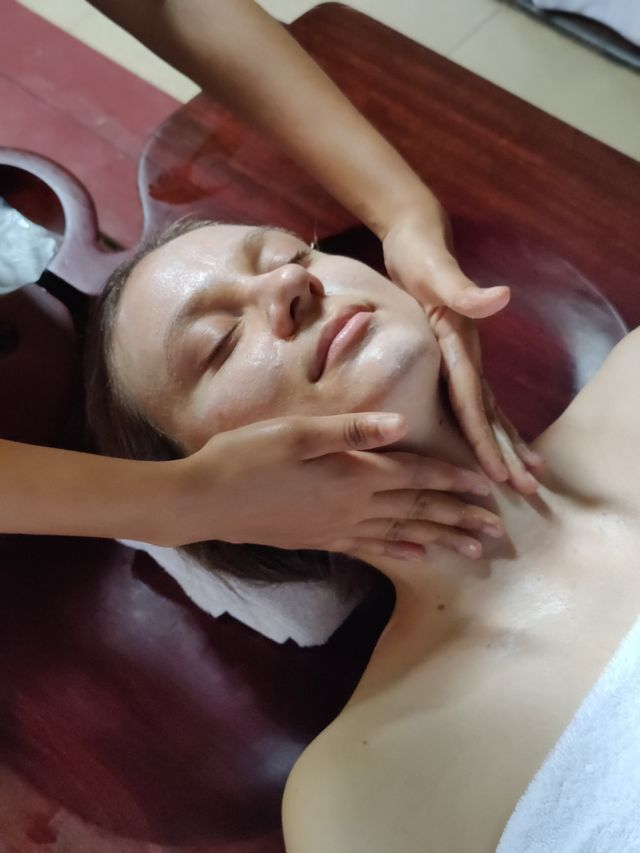
Typical experiences after an Ayurveda Abhyanga full-body massage include:
- A warm, calm feeling throughout the body
- Softer-feeling skin due to the oil
- Mental relaxation after the treatment
- A desire for rest rather than activity
How Does an Abhyanga Full-Body Massage Work?
The Ayurveda treatment process may vary slightly depending on the location and tradition, but good Ayurveda centres generally follow a clear structure.
- Preparation and brief consultation: Before the massage, a doctor’s consultation will be done during which any health complaints, acute illnesses, allergic conditions, recent surgeries, conditions like pregnancy and specific preferences among others are discussed..
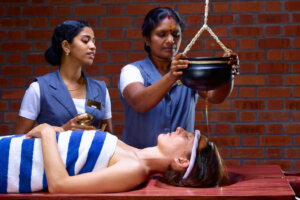
- Selection and warming of the oil: The oil is selected based on the condition of the person and is warmed but not made hot. Usually, considerably more oil is used than in a conventional wellness massage, so the skin feels noticeably oily during the treatment.
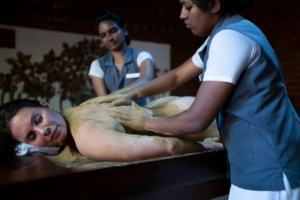
- Body massage: The therapist uses gentle strokes, circular movements around the joints and rhythmic techniques. The pressure is generally moderate but can be adjusted.
- Areas treated: An Abhyanga full-body massage generally includes the back, legs, feet, arms, hands, abdomen, chest area, shoulders and head. The intimate areas are naturally excluded.
- Rest period: Afterward, you remain lying down or sit quietly for a few minutes. This period is important because the body should not immediately return to activity.
- Showering: Excess oil can then be rinsed off with a warm shower. In some traditions, a light layer of oil is intentionally left on the skin.
If the head is included in the treatment, the hair may also become oily. If you have appointments afterward, plan accordingly or ask whether the head can be excluded.
Which Oil Is Used for Abhyanga?
Different oils may be used for an Ayurvedic oil massage. Sesame based medicated oils are widely used in many Ayurvedic traditions, while coconut based medicated oils are also popular in Kerala, particularly because of the warm climate. The choice depends on the skin type, season, treatment concept and individual assessment.
Oil is not simply used as a lubricant. It strongly influences how the treatment feels—heavier, lighter, warming or cooling. However, medical effects can not be promised universally.
What Do You Wear for an Ayurveda Massage?
During an Ayurveda massage, you generally wear disposable underwear, a special treatment cloth or your own underwear that can get oily. Privacy is important during the massage and any discomfort may be conveyed to the therapist or doctor prior to the massage and experienced therapists explain what will happen beforehand.
Loose clothing is practical afterward. Fine fabrics, light-coloured clothing or tight trousers are less suitable if some oil remains on the skin.
How Long Does an Abhyanga Massage Take and How Much Does It Cost?
An Abhyanga massage often lasts around 60 minutes. Shorter treatments focus more on the massage process, while longer sessions allow more time for relaxation, the head, feet and slower techniques.
It is not possible to give a reliable standard price. The cost depends on the country, duration, qualifications of the therapists, consultation, oil quality and setting. At an Ayurveda resort, Abhyanga is often part of a programme rather than being offered only as an individual massage service.
Who Is Abhyanga Suitable For?
Abhyanga is particularly suitable for people looking for a calm, oil-rich and traditional Ayurveda treatment for relaxation. It is well suited to guests who are not expecting a strong sports massage but prefer warmth, rhythm and a gentle full-body experience.
Before your first treatment, it is useful to clearly communicate your preferences: more or less pressure, whether you want a head massage, sensitive areas or whether you prefer quiet during the massage.
When Should You Avoid an Abhyanga Massage?
In cases of fever, acute infections, fresh injuries, skin irritation, certain cardiovascular conditions, shortly after surgery or when experiencing unexplained symptoms, you should seek medical advice beforehand. Individual clarification is also important during pregnancy.
Abhyanga does not replace medical diagnosis or treatment. At an Ayurveda centre, suitability should be carefully discussed in advance, particularly if you already have medical conditions or take medication.
Abhyanga vs. Classic Full-Body Massage
The main difference lies in the approach: Abhyanga originates from Ayurveda and focuses strongly on warm oil, rhythm and individual adaptation. A classic full-body massage is often more focused on muscles, tension and local pressure techniques.
Aspect | Abhyanga Full-Body Massage | Classic Full-Body Massage |
Tradition | Ayurveda | Western massage practice |
Oil | Large amount of warm oil | Less oil or lotion |
Approach | Rhythmic, flowing and balancing | Often muscle-focused |
Individualisation | May be based on Ayurvedic assessment | Based on symptoms and preferred pressure |
Goal | Relaxation, body care and rest | Loosening, relaxation and mobility |
Why Is Kerala Interesting for an Abhyanga Experience?
Kerala is closely associated with Ayurveda because the practice is visibly rooted there in everyday life, education and traditional wellness culture. An Ayurvedic massage in Kerala is often not an isolated experience but takes place in an environment that combines consultation, nutrition, yoga, relaxation and regular treatments.
This makes the experience different from simply searching for a massage nearby. Those who choose an Ayurveda massage in Kerala can experience Abhyanga within its cultural context, with a warm climate, more time and an environment designed around relaxation and rejuvenation.
Experience Abhyanga at The Nattika Beach Ayurveda Resort
At The Nattika Beach Ayurveda Resort, Abhyanga is incorporated into a peaceful beach setting, personalised care and traditional Ayurvedic procedures. Guests do not receive a random standard massage; instead, the treatment can be integrated into a wellness programme.
For more information about the treatment itself, see the Abhyanga Massage page. The principles of an Ayurvedic treatment also explain why consultation, daily routine, nutrition and recovery are considered together in Ayurveda.
FAQ'S
Many people experience Abhyanga as a calming, warming and nourishing massage. In Ayurveda, it is traditionally associated with inner balance and relaxation. Medical healing effects should not be derived from this. As a wellness treatment, it may help you become more aware of your body and relax.
It usually begins with a brief consultation, followed by the selection and application of warm oil. The body is massaged using gentle, rhythmic movements. A short rest period follows the treatment. Excess oil can then be rinsed off with a warm shower.
You generally wear disposable underwear, a treatment cloth or your own underwear that can become oily. The body is respectfully covered section by section during the massage. Loose clothing is recommended afterward because the skin may still be slightly oily.
An Abhyanga massage commonly lasts around 60 minutes. The exact duration depends on the location, treatment concept and whether the head, feet and rest period are included in greater detail. Within Ayurveda programmes, the duration may be planned individually.
The cost varies considerably depending on the country, duration, qualifications of therapists, oil, consultation and surroundings. A single treatment in a city is priced differently from a treatment at an Ayurveda resort. Reputable providers clearly state their prices or explain whether the massage is included as part of a package.
Plan some time to rest afterward, take a warm rather than a very hot shower and avoid strenuous exercise immediately after the treatment. Drink enough water and wear comfortable clothing. If oil has been applied to your hair, you may need to wash it thoroughly.
Latest Blogs